
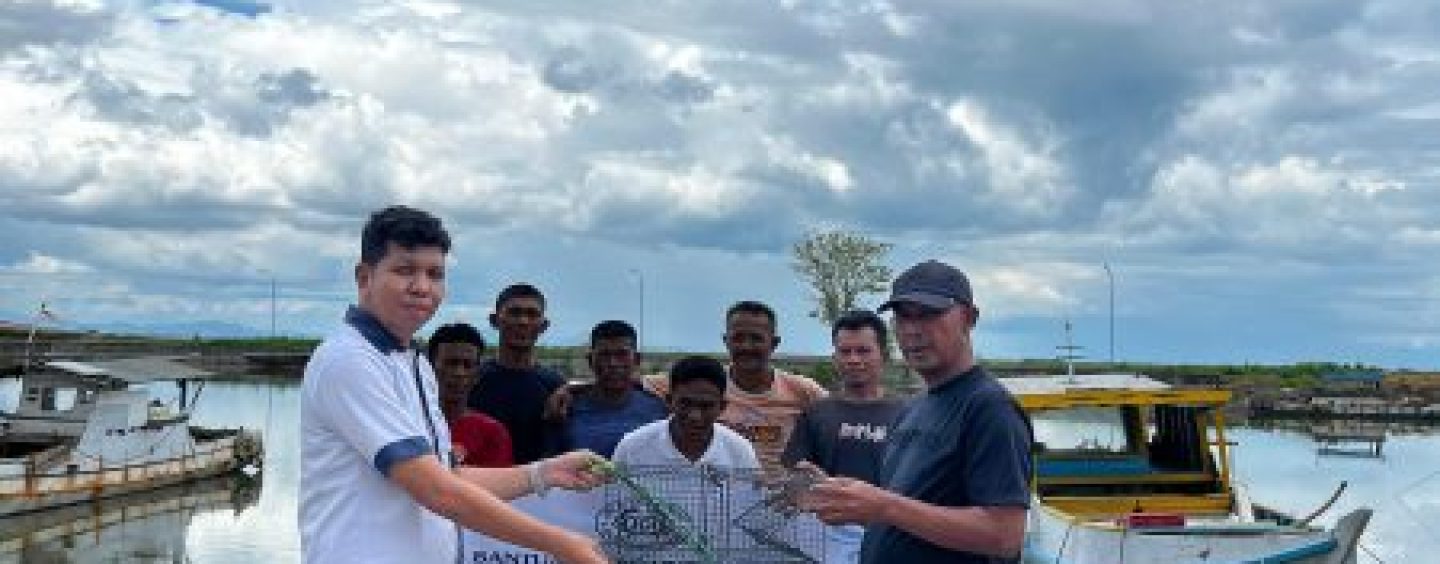
PT. Jala Crabindo International Crabs Traps Distribution Through Fishing Gear Swap in Bombana, South Sulawesi
by adminapri December 14, 2025 0 commentsStrengthening Sustainable Fisheries Through Responsible Fishing Gear
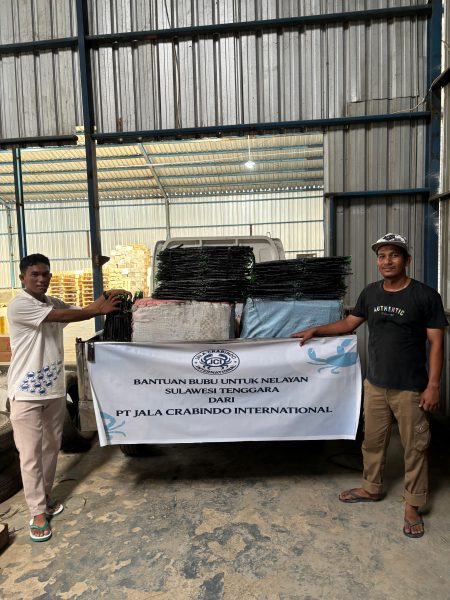
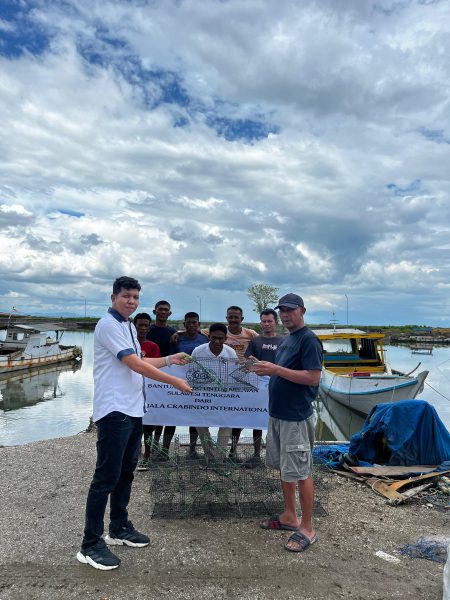
Bombana, South Sulawesi — 6 December 2025. PT Jala Crabindo International (PT JCI) continues to demonstrate strong commitment to responsible and sustainable blue swimming crab fisheries by implementing the Fishing Gear Swap program across its supply chain. The initiative distributes bubu fishing gear to replace traditional gillnets, especially in key harvesting regions.
The latest activity was held in Bombana, South Sulawesi, involving company representatives and local blue swimming crab fishers. Through this effort, PT JCI aims to build a more responsible fishing system, reduce bycatch risks, support fisher livelihoods, and maintain export access under the Marine Mammal Protection Act (MMPA).
Why the Fishing Gear Swap Matters for Indonesia’s Blue Swimming Crab Sector
Sustainable fishing gear is increasingly important for Indonesia’s crab industry. Global seafood markets today require strong compliance with traceability and marine sustainability standards. Therefore, the transition from gillnets to bubu traps plays a significant role in strengthening legality and supply chain accountability.
Adopting bubu fishing gear is expected to:
reduce accidental bycatch
protect marine mammals and biodiversity
improve traceability along the supply chain
support sustainable stock management
secure long-term export market access
ensure responsible harvesting practices
In addition, environmentally safer fishing gear encourages gradual transformation that can bring long-term ecological and economic benefits for both fishers and processing companies.
Who Benefits From the Program?
The Fishing Gear Swap implementation involves collaboration between company stakeholders and local fishers in Bombana. Through direct support, PT JCI ensures that small-scale fishers continue operating without being disadvantaged by regulatory requirements.
Fishers benefit through:
continued livelihood from blue swimming crab harvesting
legal fishing practices aligned with export demands
higher product value due to traceability assurance
reduced risk of gear confiscation due to non-compliance
increased long-term fishing sustainability
Meanwhile, PT JCI benefits by ensuring that its supply chain remains aligned with international regulations, especially those related to marine mammal protection.
How the Initiative Supports MMPA Compliance
The Marine Mammal Protection Act (MMPA) requires supplying countries, including Indonesia, to prove that seafood imported into the United States is harvested using fishing practices that minimize harm to marine mammals.
Fishing Gear Swap activities—such as replacing gillnets with bubu traps—are a direct step toward satisfying these requirements. Consequently, this supports PT JCI’s ability to continue exporting blue swimming crab products into key international markets.
As a result, the program not only promotes sustainability but also secures future business continuity and export certifications.
Strategic Expansion: Bombana, Muna and Buton
The program in Bombana becomes the starting point for wider implementation in major blue swimming crab producing regions. PT JCI plans to continue distributions in:
Muna
Buton
These regions contribute significantly to Indonesia’s crab supply chain, making sustainability transitions highly critical.
The expansion reflects PT JCI’s strategic agenda to cover all nodes in the production chain, ensuring that sustainability and MMPA compliance apply consistently throughout.
Promoting Responsible Fisheries and Long-Term Ecosystem Protection
The Fishing Gear Swap program is not only designed to respond to international regulations. It also contributes to ecosystem conservation. With safer fishing methods, potential risks toward non-target species, including marine mammals, are minimized.
This strengthens Indonesia’s commitment toward:
sustainable marine resource management
biodiversity protection
responsible seafood production
long-term ecological balance
Because blue swimming crab resources rely on healthy habitats and coastal ecosystems, sustainability initiatives today will directly determine future harvest potential.
Supporting Fisher Livelihoods and Local Coastal Communities
Blue swimming crab remains an important livelihood source for thousands of small-scale fishers across Indonesia. By ensuring access to sustainable fishing gear, fishers can continue harvesting legally and responsibly.
Therefore, PT JCI’s program not only protects the environment, but also supports socio-economic continuity for coastal communities who depend on blue swimming crab harvesting.
How PT JCI Integrates Sustainability into Its Business Strategy
PT JCI’s sustainability approach is not limited to compliance. The company actively embeds responsible fisheries principles across its supply network.
Practical actions include:
direct fishing gear support
education and field socialization
communication with fishers
continuous supply chain monitoring
In the long term, PT JCI targets a fully traceable and responsible blue swimming crab network that supports both international certification and ethical seafood trade.
A Sustainable Path for Indonesia’s Blue Swimming Crab Industry
Indonesia has one of the world’s largest blue swimming crab resources, making it essential to implement sustainable fisheries management. Transformation programs such as Fishing Gear Swap provide an important foundation to ensure sustainable production for the next decades.
PT JCI’s initiative helps Indonesia secure:
better stock resilience
market access stability
improved international credibility
stronger industry competitiveness
greater sustainability alignment
Conclusion
The Fishing Gear Swap transformation in Bombana reflects PT JCI’s dedication to supporting Indonesia’s blue swimming crab sustainability agenda. With strategic expansion toward Muna and Buton, the company aims to ensure wider transition across its production network.
Through collaboration with fishers, PT JCI demonstrates that responsible practices, business continuity, and environmental stewardship can move forward together—ensuring long-term benefits for coastal communities, ecosystems, and the national seafood economy.


No Comments so far
Jump into a conversationNo Comments Yet!
You can be the one to start a conversation.